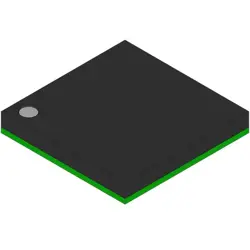

Las imágenes son solo para referencia
TPS70919DBVR
IC REG LINEAR 1.9V 150MA SOT23-5
- Fabricante
- Mfr. Parte #TPS70919DBVR
- Paquete
- Hoja de datos
- En stock5210
100% original & Nuevo
24 horas listos para el envío
Garantía de 365 días
RFQ y Obtenga más descuentos
Especificaciones
| Part Status | Active |
| Output Configuration | Positive |
| Output Type | Fixed |
| Number of Regulators | 1 |
| Voltage - Input (Max) | 30V |
| Voltage - Output (Min/Fixed) | 1.9V |
| Current - Output | 150mA |
| Current - Quiescent (Iq) | 2.05 µA |
| Current - Supply (Max) | 350 µA |
| PSRR | 80dB ~ 52dB (10Hz ~ 1kHz) |
| Control Features | Enable |
| Protection Features | Over Current, Over Temperature, Reverse Current, Under Voltage Lockout (UVLO) |
| Operating Temperature | -40°C ~ 125°C |
| Mounting Type | Surface Mount |
| Package / Case | SC-74A, SOT-753 |
| Supplier Device Package | SOT-23-5 |
| Base Product Number | TPS70919 |
Descripción general
Description
Key features include an ultra-low quiescent current, thermal shutdown, and current limit protection, ensuring reliability and safe operation. The TPS70919DBVR operates over a wide input voltage range from 2.0V to 6.5V, making it versatile for various applications, including portable electronics, sensor power supplies, and microcontrollers.
The regulator comes in a compact SOT-23 package, facilitating space-efficient designs. Its high power supply rejection ratio (PSRR) ensures minimal output voltage variation in response to input voltage changes, thereby enhancing performance in noise-sensitive applications. Overall, the TPS70919DBVR is an efficient choice for designers seeking reliable and compact voltage regulation solutions.
Features
1. Output Voltage: Fixed output voltage of 1.9V.
2. Low Dropout Voltage: Typically around 150 mV at 200 mA load, ensuring efficient operation.
3. Output Current: Supports output currents up to 200 mA.
4. Quiescent Current: Low quiescent current, enhancing battery life in portable devices.
5. Power Supply Rejection Ratio (PSRR): High PSRR helps in minimizing output voltage variations caused by input voltage changes.
6. Thermal Protection: Built-in thermal shutdown feature protects the device from overheating.
7. Small Package: Available in a compact SOT-23-5 package, ideal for space-constrained applications.
8. Operating Temperature Range: Suitable for a wide temperature range from -40°C to +125°C.
These features make the TPS70919DBVR suitable for applications in battery-powered devices, microcontrollers, and other sensitive electronic systems.
Package
Pinout
1. VIN (Pin 1): Input voltage supply.
2. GND (Pin 2): Ground reference.
3. VOUT (Pin 3): Output voltage that is regulated.
4. EN (Pin 4): Enable pin; active high to turn the device on.
5. NC (Pin 5): No connect; should be left unconnected.
The TPS70919 provides a stable output voltage with low quiescent current, making it suitable for various low-power applications.
Manufacturer
Application
Equivalent
1. LP2950 - Texas Instruments
2. MIC5205 - Microchip Technology
3. LT1763 - Analog Devices
4. NCP1117 - ON Semiconductor
Always verify specifications like output voltage, current rating, and package type to ensure compatibility for your specific application.
Envío
Métodos de envíoNosotros
ofrecer servicios de envío globales a través de DHL, FedEx, TNT, UPS, o cualquier otro expediente de su elección.
Referencia de tarifas de envío (DHL/FedEx):
DHL: El costo de envío oscila entre $25-$45 (0.5kg), con un tiempo de entrega estimado de 2-5 días hábiles.
FedEx: El costo de envío oscila entre $25-$40 (0.5kg), con un tiempo de entrega estimado de 3-7 días hábiles.
UPS: El costo de envío oscila entre $25-$45 (0.5kg), con un tiempo de entrega estimado de 3-7 días hábiles.
TNT: El costo de envío oscila entre $25-$65 (0.5kg), con un tiempo de entrega estimado de 3-7 días hábiles.
EMS: El costo de envío oscila entre $30-$50 (0.5kg), con un plazo de entrega estimado de 7-15 días hábiles.
Correo aéreo registrado: El costo de envío es de $2-$4 (0.1kg), con un tiempo de entrega estimado de 5-20 días hábiles.
Pagos
Payment Methods
El plazo de pago es 100% prepagado.
Actualmente, solo aceptamos los siguientes métodos de pago:
1. de PayPal
2. Tarjeta de crédito/débito
3. Transferencia bancaria
Similar
-
![MX25R8035FM1IL0]() MX25R8035FM1IL0
Macronix
-
![MX25L3233FZBI-08Q]() MX25L3233FZBI-08Q
Macronix
-
![MX25L3233FM1I-08Q]() MX25L3233FM1I-08Q
Macronix
-
![MX25V1635FZNI]() MX25V1635FZNI
Macronix
-
![MX25V4035FZUI]() MX25V4035FZUI
Macronix
-
![MX25R6435FBDIL0]() MX25R6435FBDIL0
Macronix
-
![MX29GL512FHXFI-11G]() MX29GL512FHXFI-11..
Macronix
-
![MX25U51279GXDR00]() MX25U51279GXDR00
Macronix
-
![MX25U3232FZBI02]() MX25U3232FZBI02
Macronix
-
![MX25L12833FM2I-10G]() MX25L12833FM2I-10..
Macronix
-
![MX25L12833FZNI-10G]() MX25L12833FZNI-10..
Macronix
-
![MX29F040CQI-70G]() MX29F040CQI-70G
Macronix