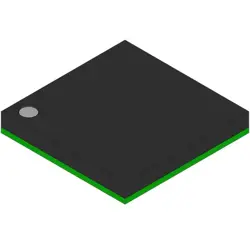

Las imágenes son solo para referencia
SG-210STF
- Fabricante
- Mfr. Parte #SG-210STF
- Paquete
- Hoja de datos SG-210STF DataSheet
- En stock27084
100% original & Nuevo
24 horas listos para el envío
Garantía de 365 días
RFQ y Obtenga más descuentos
Especificaciones
| Manufacturer | Seiko Epson |
| Package | SMD2520-4P |
| Operating Temperature | -40℃~+85℃ |
| Voltage - Supply | 1.6V~3.6V |
| Frequency | 13MHz |
| Current - Supply | 1.8mA |
| Frequency Stability | ±50ppm |
Descripción general
Description
Key features may include low phase noise, high output stability, and programmable frequency settings, allowing users to create precise signals for experiments and equipment validation. The SG-210STF often includes digital interfaces for easy integration with computers and automation systems, facilitating remote control and data logging.
Its portability and user-friendly interface make it accessible for both novice users and seasoned professionals in fields such as telecommunications, electronics, and educational institutions. Overall, the SG-210STF is valuable for anyone needing reliable signal generation in a compact form factor.
Features
1. Frequency Range: Covers a broad frequency spectrum, typically from a few Hz to several GHz, suitable for RF and microwave applications.
2. Output Waveforms: Supports multiple waveform types, including sine, square, triangle, and pulse, allowing for flexible testing scenarios.
3. Modulation Capabilities: Offers AM, FM, PM, and FSK modulation for advanced signal analysis and simulation.
4. User-Friendly Interface: Equipped with a large display and intuitive controls for easy operation and quick adjustments.
5. High Output Power: Provides sufficient output power levels to drive various loads effectively.
6. Portability: Compact design makes it easy to transport and use in different testing environments.
7. Programmability: Supports remote control via USB or LAN for automated testing setups.
8. Memory Storage: Allows users to save and recall settings for efficiency in repetitive tasks.
These features make the SG-210STF ideal for engineers and technicians in laboratories, production lines, and field testing environments.
Package
Pinout
1. Output (OUT): Delivers the oscillator's clock signal.
2. Voltage Control (VC): Allows for tuning of the frequency via an external voltage.
3. Ground (GND): Common ground connection.
4. Supply Voltage (Vcc): Power supply input, usually around 3.3V or 5V.
5. Enable (EN): Optional pin to enable/disable the oscillator.
6. Temperature Compensation: Internal circuitry for maintaining frequency stability over temperature variations.
7. Not Connected (NC): Typically refers to a pin that is not used and may be left unconnected.
Note that specific pin assignments may vary slightly by manufacturer, so it's recommended to consult the datasheet for exact details.
Manufacturer
Application
Equivalent
Envío
Métodos de envíoNosotros
ofrecer servicios de envío globales a través de DHL, FedEx, TNT, UPS, o cualquier otro expediente de su elección.
Referencia de tarifas de envío (DHL/FedEx):
DHL: El costo de envío oscila entre $25-$45 (0.5kg), con un tiempo de entrega estimado de 2-5 días hábiles.
FedEx: El costo de envío oscila entre $25-$40 (0.5kg), con un tiempo de entrega estimado de 3-7 días hábiles.
UPS: El costo de envío oscila entre $25-$45 (0.5kg), con un tiempo de entrega estimado de 3-7 días hábiles.
TNT: El costo de envío oscila entre $25-$65 (0.5kg), con un tiempo de entrega estimado de 3-7 días hábiles.
EMS: El costo de envío oscila entre $30-$50 (0.5kg), con un plazo de entrega estimado de 7-15 días hábiles.
Correo aéreo registrado: El costo de envío es de $2-$4 (0.1kg), con un tiempo de entrega estimado de 5-20 días hábiles.
Pagos
Payment Methods
El plazo de pago es 100% prepagado.
Actualmente, solo aceptamos los siguientes métodos de pago:
1. de PayPal
2. Tarjeta de crédito/débito
3. Transferencia bancaria
Similar
-
![MX25L3233FZBI-08Q]() MX25L3233FZBI-08Q
MX25L3233FZBI-08Q
Macronix
-
![MX25V4035FZUI]() MX25V4035FZUI
MX25V4035FZUI
Macronix
-
![MX25L8035EM2I-10G]() MX25L8035EM2I-10G
MX25L8035EM2I-10G
Macronix
-
![MX25R6435FBDIL0]() MX25R6435FBDIL0
MX25R6435FBDIL0
Macronix
-
![MX25L25673GMI-08G]() MX25L25673GMI-08G
MX25L25673GMI-08G
Macronix
-
![MX29GL512FHXFI-11G]() MX29GL512FHXFI-11..
MX29GL512FHXFI-11..
Macronix
-
![MX25L2006EM1I-12G]() MX25L2006EM1I-12G
MX25L2006EM1I-12G
Macronix
-
![MX25R1635FZUIH0]() MX25R1635FZUIH0
MX25R1635FZUIH0
Macronix
-
![MX25V1635FM2I]() MX25V1635FM2I
MX25V1635FM2I
Macronix
-
![MX25U3232FZBI02]() MX25U3232FZBI02
MX25U3232FZBI02
Macronix
-
![MX25L6433FM2I-08G]() MX25L6433FM2I-08G
MX25L6433FM2I-08G
Macronix
-
![MX25L12833FM2I-10G]() MX25L12833FM2I-10..
MX25L12833FM2I-10..
Macronix