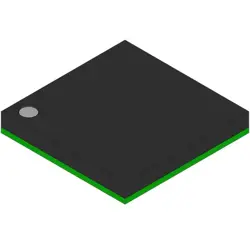

Las imágenes son solo para referencia
LM2670SX-ADJ
IC REG BUCK ADJ 3A TO263-7
- Fabricante
- Mfr. Parte #LM2670SX-ADJ
- Paquete TO263-7
- Hoja de datos
- En stock5636
100% original & Nuevo
24 horas listos para el envío
Garantía de 365 días
RFQ y Obtenga más descuentos
Especificaciones
| Package | Tape & Reel (TR),Cut Tape (CT) |
| Series | SIMPLE SWITCHER® |
| ProductStatus | Obsolete |
| Function | Step-Down |
| OutputConfiguration | Positive |
| Topology | Buck |
| OutputType | Adjustable |
| NumberofOutputs | 1 |
| Voltage-Input(Min) | 8V |
| Voltage-Input(Max) | 40V |
| Voltage-Output(Min/Fixed) | 1.2V |
| Voltage-Output(Max) | 37V |
| Current-Output | 3A |
| Frequency-Switching | 260kHz |
| SynchronousRectifier | No |
| OperatingTemperature | -40°C ~ 125°C (TJ) |
| MountingType | Surface Mount |
| Package/Case | TO-263-8, D²Pak (7 Leads + Tab), TO-263CA |
Descripción general
Description
Features
Key features include:
1. Efficiency: It offers high efficiency, making it suitable for applications that require power conservation.
2. Switching Frequency: Operates at a fixed frequency of 260 kHz, which allows for smaller external components and overall compact design.
3. Output Current: Capable of delivering up to 3A of output current, suitable for medium-power applications.
4. Thermal Protection: Incorporates thermal shutdown and current limiting to protect against overload conditions.
5. Soft Start: Includes an adjustable soft-start feature to control the inrush current during startup.
6. Low Standby Current: Features low standby current to enhance battery life in portable applications.
7. Package: Available in a surface-mount TO-263 package, which aids in efficient heat dissipation.
These features make the LM2670SX-ADJ a versatile choice for various applications, including consumer electronics, industrial controls, and automotive systems.
Package
Pinout
1. Pin 1 (Vin): This is the input voltage pin where the unregulated input voltage is supplied.
2. Pin 2 (SW): The switch pin is connected to the inductor and facilitates the switching action of the internal transistor.
3. Pin 3 (GND): Ground pin for the device, serving as the common ground reference for both input and output.
4. Pin 4 (FB): The feedback pin receives the output voltage signal for regulation, helping maintain the desired output voltage by adjusting the duty cycle.
5. Pin 5 (ON/OFF): This pin is used to enable or disable the device. Pulling this pin low will disable the regulator, reducing current draw.
The LM2670SX-ADJ is designed for adjustable output, allowing for a wide range of output voltages by using external resistors connected to the feedback pin.
Manufacturer
Application
Equivalent
1. LM2576-ADJ: A similar adjustable-output buck regulator from Texas Instruments.
2. MC34063: A commonly used DC-DC converter with similar functionality.
3. LM2596-ADJ: Another adjustable-output buck regulator.
4. LT1076: A Linear Technology adjustable step-down regulator.
5. MP1584EN: A compact, high-frequency buck converter.
These alternatives vary in efficiency, packaging, and frequency, so evaluate based on specific design requirements.
Envío
Métodos de envíoNosotros
ofrecer servicios de envío globales a través de DHL, FedEx, TNT, UPS, o cualquier otro expediente de su elección.
Referencia de tarifas de envío (DHL/FedEx):
DHL: El costo de envío oscila entre $25-$45 (0.5kg), con un tiempo de entrega estimado de 2-5 días hábiles.
FedEx: El costo de envío oscila entre $25-$40 (0.5kg), con un tiempo de entrega estimado de 3-7 días hábiles.
UPS: El costo de envío oscila entre $25-$45 (0.5kg), con un tiempo de entrega estimado de 3-7 días hábiles.
TNT: El costo de envío oscila entre $25-$65 (0.5kg), con un tiempo de entrega estimado de 3-7 días hábiles.
EMS: El costo de envío oscila entre $30-$50 (0.5kg), con un plazo de entrega estimado de 7-15 días hábiles.
Correo aéreo registrado: El costo de envío es de $2-$4 (0.1kg), con un tiempo de entrega estimado de 5-20 días hábiles.
Pagos
Payment Methods
El plazo de pago es 100% prepagado.
Actualmente, solo aceptamos los siguientes métodos de pago:
1. de PayPal
2. Tarjeta de crédito/débito
3. Transferencia bancaria
Similar
-
![MX25R8035FM1IL0]() MX25R8035FM1IL0
MX25R8035FM1IL0
Macronix
-
![MX25L3233FZBI-08Q]() MX25L3233FZBI-08Q
MX25L3233FZBI-08Q
Macronix
-
![MX25V1635FZNI]() MX25V1635FZNI
MX25V1635FZNI
Macronix
-
![MX25V1635FZNQ03]() MX25V1635FZNQ03
MX25V1635FZNQ03
Macronix
-
![MX25V5126FM1I]() MX25V5126FM1I
MX25V5126FM1I
Macronix
-
![MX25V4035FZUI]() MX25V4035FZUI
MX25V4035FZUI
Macronix
-
![MX30LF2G28AD-TI]() MX30LF2G28AD-TI
MX30LF2G28AD-TI
Macronix
-
![MX25R6435FBDIL0]() MX25R6435FBDIL0
MX25R6435FBDIL0
Macronix
-
![MX25L25673GMI-10G]() MX25L25673GMI-10G
MX25L25673GMI-10G
Macronix
-
![MX29GL512FHXFI-11G]() MX29GL512FHXFI-11..
MX29GL512FHXFI-11..
Macronix
-
![MX25U51279GXDR00]() MX25U51279GXDR00
MX25U51279GXDR00
Macronix
-
![MX25L6433FM2I-08G]() MX25L6433FM2I-08G
MX25L6433FM2I-08G
Macronix