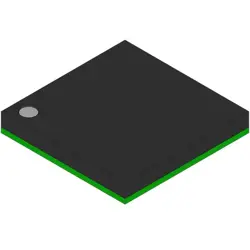
Las imágenes son solo para referencia
LDA210S
OPTOISOLTR 3.75KV 2CH DARL 8-SMD
- Fabricante
- Mfr. Parte #LDA210S
- Paquete
- Hoja de datos
- En stock2761
100% original & Nuevo
24 horas listos para el envío
Garantía de 365 días
RFQ y Obtenga más descuentos
Especificaciones
| Part Status | Obsolete |
| Number of Channels | 2 |
| Voltage - Isolation | 3750Vrms |
| Current Transfer Ratio (Min) | 300% @ 1mA |
| Current Transfer Ratio (Max) | 30000% @ 1mA |
| Turn On / Turn Off Time (Typ) | 8µs, 345µs |
| Input Type | AC, DC |
| Output Type | Darlington |
| Voltage - Output (Max) | 30V |
| Voltage - Forward (Vf) (Typ) | 1.2V |
| Current - DC Forward (If) (Max) | 1 mA |
| Vce Saturation (Max) | 1V |
| Operating Temperature | -40°C ~ 85°C |
| Mounting Type | Surface Mount |
| Package / Case | 8-SMD, Gull Wing |
| Supplier Device Package | 8-SMD |
| Base Product Number | LDA210 |
Descripción general
Description
Typically, a course introduction will outline key topics, such as an introduction to Latent Dirichlet Allocation (LDA) if the course is about machine learning or text analysis. LDA is a generative statistical model used for topic modeling, where documents are represented as mixtures of topics, and topics are represented by a mixture of words. The course might cover how to implement LDA, interpret results, and apply it to various data sets.
Additionally, the introduction would mention prerequisites, such as familiarity with basic statistics, programming skills, or prior courses in data science. It may also highlight learning outcomes, assessment methods, and resources like textbooks or software tools. Overall, the introduction sets the stage for what students can expect to learn and achieve in the course.
Features
1. Power Output: Delivers robust sound with clarity, suitable for medium to large venues.
2. Audio Channels: Supports multiple channels for flexible audio distribution.
3. Connectivity: Equipped with various input and output options, including Bluetooth, RCA, and XLR connections, allowing integration with different audio systems.
4. Control Interface: User-friendly interface with both manual controls and remote management capabilities.
5. Efficiency: High-efficiency design to minimize energy consumption while maintaining performance.
6. Durability: Built with high-quality materials for long-lasting reliability and performance.
7. Cooling System: Advanced cooling mechanisms to prevent overheating during prolonged use.
8. DSP Technology: Integrated digital signal processing for enhanced audio quality and customization options.
9. Protection Features: Includes safeguards against surges, short circuits, and overheating to protect the device and connected equipment.
10. Compact Design: Space-saving form factor, ideal for installations with limited space.
Overall, the LDA210S combines high performance with flexibility, making it suitable for various professional audio environments.
Package
Pinout
1. Input pins: These are used to connect the control signal, usually from a low-voltage source.
2. Output pins: These connect to the load, allowing the relay to control higher voltage or current circuits.
3. Common/ground pins: These are used for grounding or completing circuits within the device.
4. Optional pins: Depending on the model, there may also be additional pins for features such as feedback or diagnostic signals.
For precise pin count and function details, referring to the specific datasheet provided by the manufacturer of the LDA210S is recommended, as this will provide exact and authoritative information tailored to that specific component.
Manufacturer
Application
Equivalent
Envío
Métodos de envíoNosotros
ofrecer servicios de envío globales a través de DHL, FedEx, TNT, UPS, o cualquier otro expediente de su elección.
Referencia de tarifas de envío (DHL/FedEx):
DHL: El costo de envío oscila entre $25-$45 (0.5kg), con un tiempo de entrega estimado de 2-5 días hábiles.
FedEx: El costo de envío oscila entre $25-$40 (0.5kg), con un tiempo de entrega estimado de 3-7 días hábiles.
UPS: El costo de envío oscila entre $25-$45 (0.5kg), con un tiempo de entrega estimado de 3-7 días hábiles.
TNT: El costo de envío oscila entre $25-$65 (0.5kg), con un tiempo de entrega estimado de 3-7 días hábiles.
EMS: El costo de envío oscila entre $30-$50 (0.5kg), con un plazo de entrega estimado de 7-15 días hábiles.
Correo aéreo registrado: El costo de envío es de $2-$4 (0.1kg), con un tiempo de entrega estimado de 5-20 días hábiles.
Pagos
Payment Methods
El plazo de pago es 100% prepagado.
Actualmente, solo aceptamos los siguientes métodos de pago:
1. de PayPal
2. Tarjeta de crédito/débito
3. Transferencia bancaria
Similar
-
![MX25R8035FM1IL0]() MX25R8035FM1IL0
Macronix
-
![MX66U1G45GXDI00]() MX66U1G45GXDI00
Macronix
-
![MX25V5126FM1I]() MX25V5126FM1I
Macronix
-
![MX25V16066M1I02]() MX25V16066M1I02
Macronix
-
![MX25V16066M2I02]() MX25V16066M2I02
Macronix
-
![MX25R6435FBDIL0]() MX25R6435FBDIL0
Macronix
-
![MX25L25673GMI-10G]() MX25L25673GMI-10G
Macronix
-
![MX29GL512FHXFI-11G]() MX29GL512FHXFI-11..
Macronix
-
![MX25U25643GZNI00]() MX25U25643GZNI00
Macronix
-
![MX25L6433FM2I-08G]() MX25L6433FM2I-08G
Macronix
-
![MX25U6435FM2I-10G]() MX25U6435FM2I-10G
Macronix
-
![MX25U25645GXDI00]() MX25U25645GXDI00
Macronix